
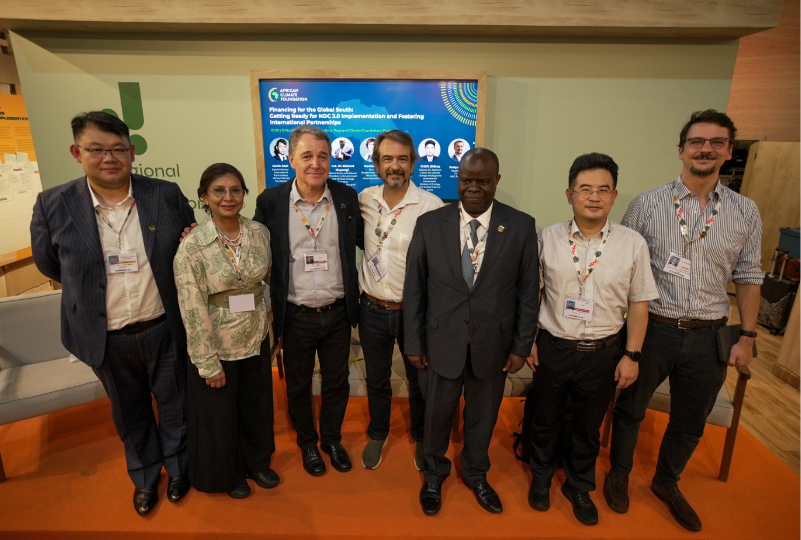
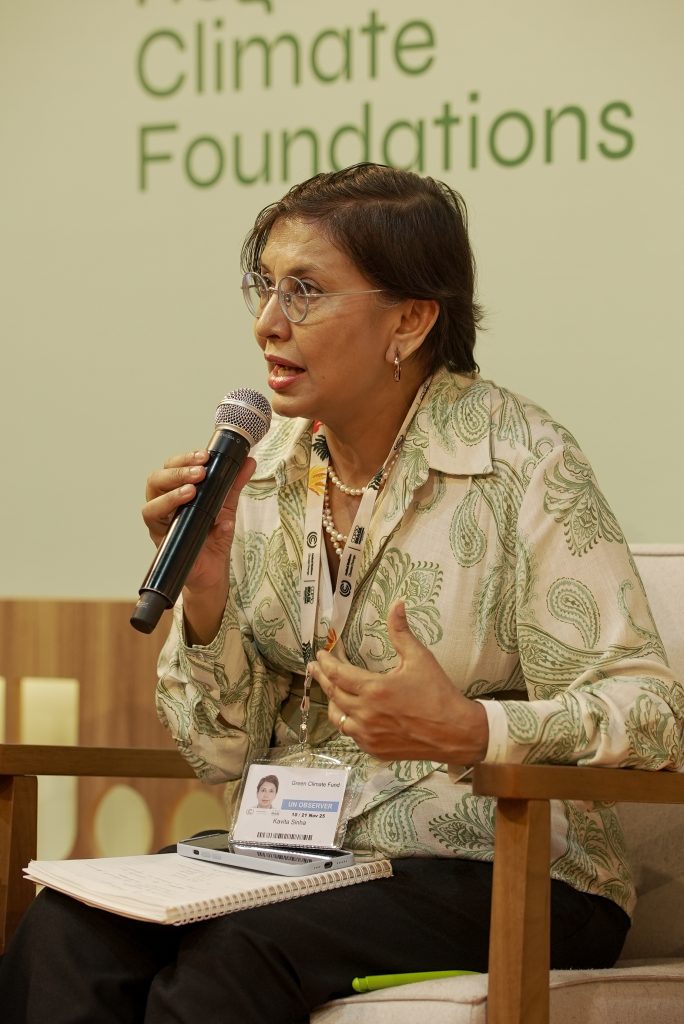
On the “finance” thematic day at COP30 — this Saturday, 15 — leaders from Global South countries and institutions explored finance options and pathways to overcome scarce resources available in the world. “In a situation of shrinking budgets, planning is really important”, introduced the director of Private Sector Facility (PSF) on the Green Climate Fund, Kavita Sinha. The institution she belongs to is the world’s largest dedicated climate fund and has a portfolio of 314 projects amounting to USD 18 billion in resources.
The NDC Partnership representative, Joaquim Leite, head of Climate Finance, also explained the existing lines and budgets for countries to implement ambitious NDCs.
But to have the funds available is not enough, many of the speakers repeated. It is urgent to create conditions of access to actors that today don’t have the capacity to borrow money. “Just to give an example, the Brazilian Amazon has 774 municipalities, but only 10 have fiscal space to access it”, explained the special envoy for civil society for COP30, André Guimarães. “We need to enable conditions under the risk of having pots of money and no operational investments taking plans”, completed.
In this way, the participants reminded that partnerships are essential. “The richest nations had developed in a high-emission base, without any restrictions. But we need a new development pathway, and in this case, South-South learning is the best way to move on”, argued deputy director at the Chinese Ministry of Ecology and Environment Chen Zhihua.
To be closer to the realities in the Global South and understanding better the conditions, Sinha announced that the Green Climate Fund will open regional offices in the region. “We received 43 qualified proposals”, said.
Leite suggested that what is needed is a system change: “We need to move beyond individual project to massive projects — not one, but one thousand, bringing to the finance world the concept of mutirão”, advocated. “A different level of collaboration among national, global and local actors, because no individual can do it alone”.
“Africa is ready for transformation”
Two keynote speakers closed the session. The Chair of the African Group of Negotiators, Richard Muyungi, from Tanzania, assured that African countries are ready to implement 3.0 ambitious NDCs. “We are focused on transforming the world into a better, greener place. But we need you for capacity”, stated.
The Climate High-Level Champion for COP30, Dan Ioshpe, reminded that partnerships are essential to close finance gaps: “Government, academia, businesses, investors and multilateral development banks are needed to accelerate transition. Together, we will be able to get more ambition for climate action”.
Baku to Belém Roadmap
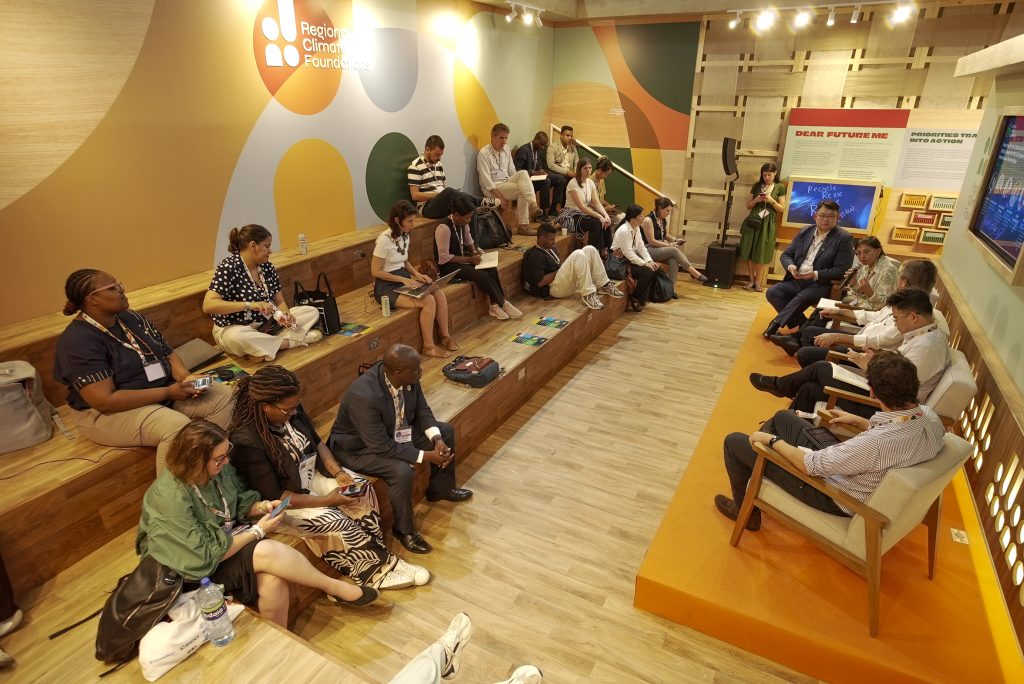
On the COP of implementation, the initiative of the Brazilian presidency to launch the Baku to Belém Roadmap, outlining ways to leverage resources for developing countries, is an important aspect of the conference, according to the executive director, Maria Netto. She made an evaluation of the finance discussions at the end of the first week of the climate conference in Belém, Brazil.
“We need to think about the next 10 years, but we can only move forward if there is funding”, stated.
To meet climate goals, the estimated amount needed is USD 1.3 trillion per year, which goes beyond the USD 300 billion committed by the developed countries in Baku, during COP29.
To meet this target, strategies include reforming development banks, making climate funds more flexible, and deploying innovative mechanisms to attract private capital by covering risks. “A combination of reforms and actions will be necessary to leverage these resources”, said Netto. “There is no silver bullet”, concluded.