
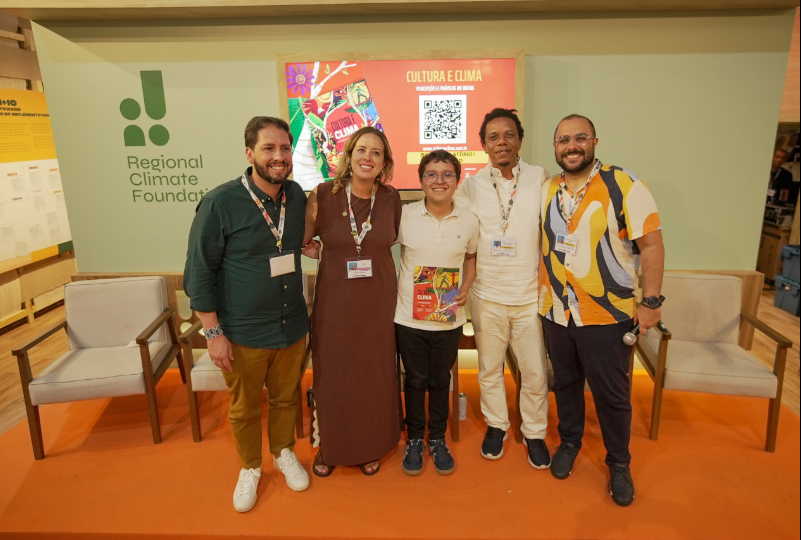
People change their minds on climate issues, becoming more open to action and reflection, when they are exposed to the subject through art experiences. This general perception has guided artivists on the path of using creativity to reach climate goals and save the planet. But since COP30, what was only empiricism can now be stated as fact, with statistical data proving the value of culture as an ally in the climate fight.
An unprecedented study released at the Regional Climate Foundations Pavilion compiled responses from more than 2,000 Brazilians on the subject and concluded that yes, culture can really change minds when it comes to climate action. More than 60% of the interviewees said they changed or reconsidered their views on climate themes after participating in cultural experiences.
“Culture has the potential to transform thoughts because it generates empathy and another form of connection”, explained Mariana Resegue, executive director of C de Cultura — one of the institutions behind the study, besides Outra Onda Conteúdo and Instituto Veredas.
One of the many reasons that a cultural approach can broaden access to climate information is because it moves away from technical language. “In climate conferences, it is usual to talk about acronyms, data and numbers, but mostly people need to deal with these topics in easier ways”, argued Eduardo Carvalho, director of Outra Onda Conteúdo.
He noted that music, books, exhibitions and audiovisual content can connect with people who do not access climate information through institutional channels. “Our goal is to build synergy to generate more artistic products, more than that, emotion and mobilization”, concluded.
The research extends the Culture and Climate platform first presented at the RCF Pavilion during COP29, which introduced an initial mapping of the cultural-climate agenda. The organizations also maintain Espalha, a platform created to link research findings to cultural initiatives through a national award for culture-and-climate projects.
An antidote to denialism
The research also found that more than half of respondents reported a sense of powerlessness regarding climate action — which suggests that communication strategies commonly used often distance the public rather than attract it. “Culture is in the territory, in people’s lives, in habits”, justified Resegue, noting that it offers an alternative route to communicate climate issues in everyday settings.
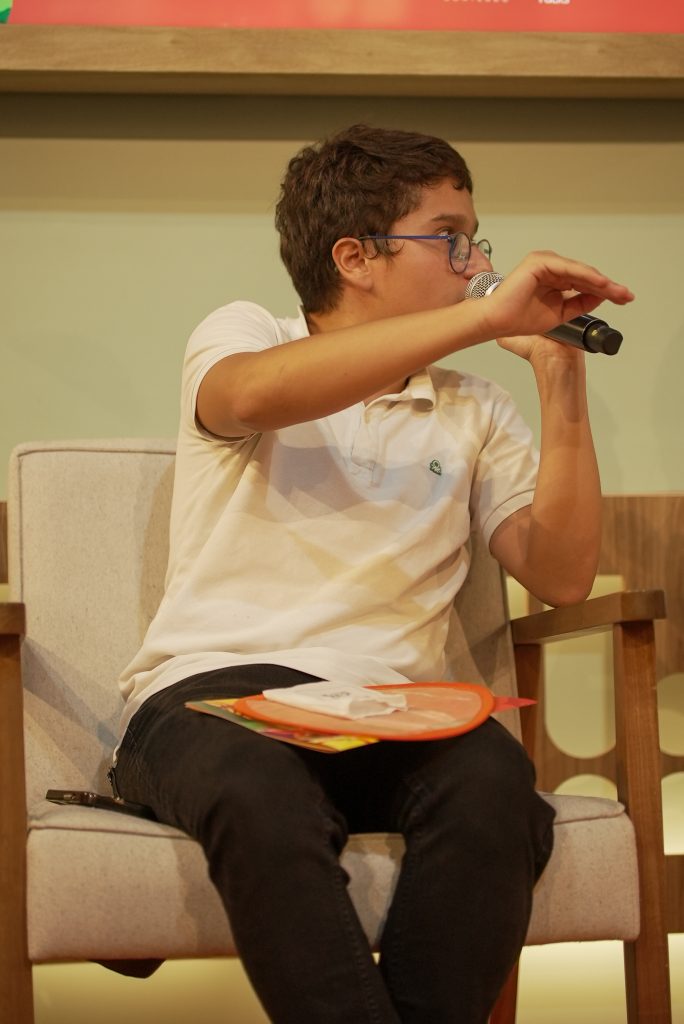
The launching of the new study was followed by a debate. One of the invited, the Colombian youth activist Francisco Vera celebrated “culture is a bridge of union” in a moment of loss of consensus and climate denial: “In the face of climate denial, what we must try to do is reach young people through culture”.
Researcher Diosmar Filho, from Associação de Pesquisa Iyaleta, reminded how certain territories remain invisible in climate debates despite their active cultural production — and that the research reveals the potential of the traditional acknowledgement: “These territories have an existence that is pulsating to be part of the solution”.
He also cited the legacy of Luiz Gonzaga as one of the main agents of climate adaptation negotiations in Latin America: his cultural work on drought in the 1950s influenced the creation of regional governance structures such as Sudene. “Cultural narratives can inform policy and expand the climate conversation beyond institutional spaces”, stated.
Public policy construction
But to reach the minds and hearts on the scale that is needed for an ecological transformation, culture needs to be stimulated by public policies that connect this field to climate. “We decided to collect more data to strengthen public policies, so that other people and organizations embrace this cause”, justified Eduardo Carvalho.
In this sense, the launching of the study during COP30 connects to a broader inclusion of cultural themes in global climate diplomacy, according to Brazil’s Ministry of Culture executive secretary, Márcio Tavares. A good example of this was a working group on the subject, co-chaired by Brazil since COP29, which gathers more than 50 countries and organizations. “Cultural knowledge and traditional practices can support livelihoods, strengthen access to education, health, food systems and generate opportunities within creative and cultural economies”, stated.
To put into practice what was said, the panel held a singing performance in Nheengatu language, from the indigenous activist Thaline Karajá, who talked about the threats on the region of Baixo Tapajós river, where she was born, close to Santarém (PA), Brazil. “We are being threatened by Ferrogrão”, a railway that will connect the grain-producing region of the Midwest to the state of Pará, ending at the Port of Miritituba (PA), Brazil. “Before, I could eat fish without worrying, but with the pollution of the rivers with pesticides, this is no longer possible”.
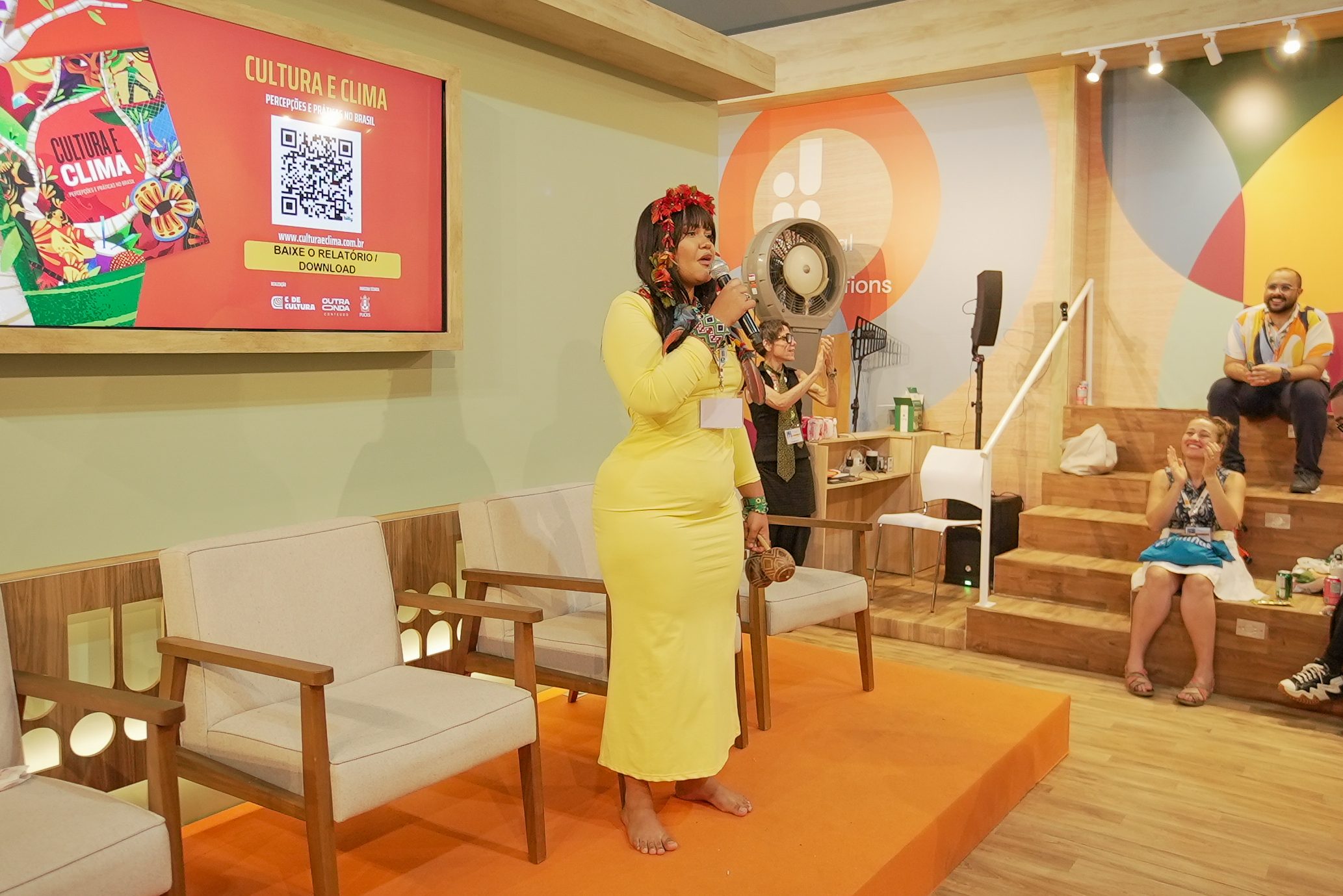
The activist, who is attending her sixth COP and has been living in Finland for two years, where she studies International Relations, spoke of the importance of education for traditional peoples. “Young indigenous people are stepping up, educating themselves to protect those who came before us, who are there within the territories”.